Amrutha Raagalaya

🌸 Why learn Carnatic music

The Power of Carnatic Sangeetam in a Child’s Development

Where Music Becomes a Journey of Knowledge, Discipline, Language & Self-Expression

Carnatic Sangeetam is more than the art of singing—it is a beautiful journey of listening, learning, discipline, creativity, and cultural discovery.

From the gentle exploration of basic Swaras to the expressive beauty of Ragas and Keerthanas, Carnatic music introduces children to a structured and enriching form of artistic education.

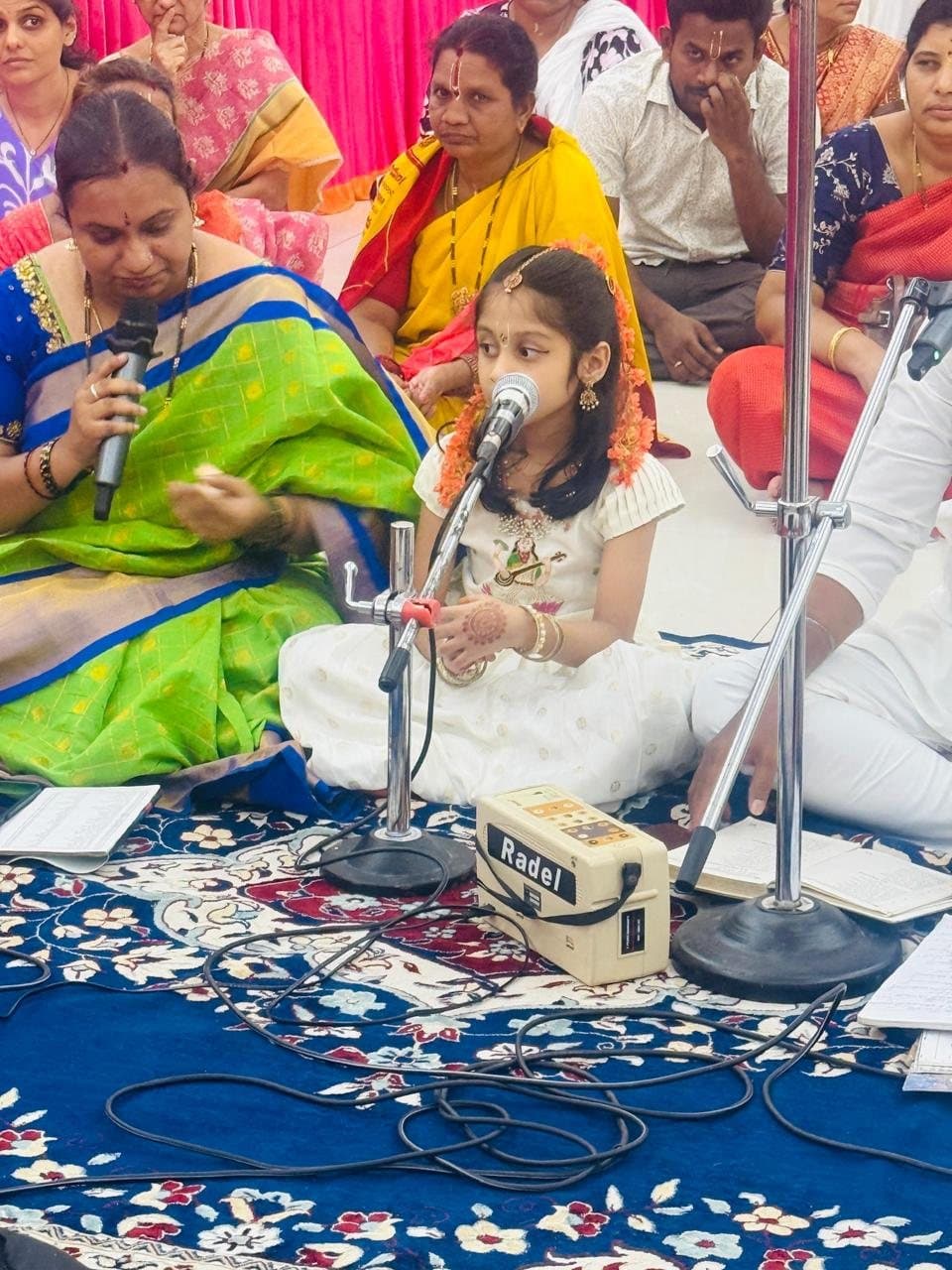
A young student singing Carnatic music

At Amrutha Raagalaya, we believe that music education can nurture a child’s musical abilities while creating opportunities to develop curiosity, perseverance, self-expression, and appreciation for India’s rich artistic traditions.

When Carnatic music is combined with an understanding of Sanskrit and other classical languages found in its repertoire, children can explore not only the melody and rhythm of a composition but also its words, meaning, poetry, and cultural context.

Our vision is to help children learn music with joy, understand what they sing, and develop a lifelong connection with the beauty of Indian classical music.

Part 1

Carnatic Music & the Developing Mind

Learning Through Sound, Memory, Rhythm & Practice

Carnatic music involves the coordinated practice of several skills:

Shruti

Developing pitch awareness and accuracy.

Swara

Learning musical notes and their patterns.

Laya & Tala

Understanding rhythm and timing.

Raga

Exploring melodic frameworks and musical expression.

Memory

Recalling compositions, lyrics, and musical phrases.

Voice Control

Practicing vocal production and articulation.

Creativity

Exploring musical expression as learners advance.

Through regular and age-appropriate practice, children can develop specialized musical skills and gain experience in listening, repetition, and responding to feedback.

What Does Science Tell Us?

Research on musical training suggests that learning music can influence musical perception and engage brain processes associated with auditory processing, memory, attention, and coordination.

Some studies have also investigated broader effects on executive functions and cognitive development. However, results vary, and research does not establish that learning Carnatic music universally increases IQ, guarantees academic success, or makes children more intelligent than those who do not study music.

At Amrutha Raagalaya, we value the educational benefits of music while respecting the individuality of every child’s learning journey.

Part 2

The Key Benefits of Learning Carnatic Sangeetam

Musical Intelligence & Listening Skills

Carnatic music develops through a systematic understanding of sound, pitch, rhythm, and melodic structure.

Children gradually learn to listen carefully, recognize musical patterns, and reproduce musical phrases.

Through practice, children may develop:

  • Pitch recognition and accuracy.
  • Rhythmic awareness.
  • Musical memory.
  • Familiarity with Ragas and compositions.
  • Greater confidence in musical expression.

The most direct benefits of music education are the musical skills children actively practice.
Memory & Concentration

Learning a Carnatic composition involves more than memorizing words.

Children may need to remember:

  • Lyrics.
  • Swara sequences.
  • Melodic phrases.
  • Rhythmic patterns.
  • The order of musical sections.

This gives them opportunities to practice musical recall and sustained attention.

A meaningful learning process

Listen → Understand → Practice → Remember → Express

With supportive instruction, children can gradually become more familiar with musical patterns and develop confidence in performing learned material.

While music practice involves attention and memory, broader improvements in general concentration or memory cannot be guaranteed solely through music education.

Discipline, Patience & Perseverance

Carnatic music is a progressive learning journey.

From Sarali Varisalu to Geethams, Varnams, and Keerthanas, children encounter musical concepts that require practice and gradual development.

They may learn to:

  • Practice consistently.
  • Work toward achievable goals.
  • Accept constructive feedback.
  • Overcome challenging musical passages.
  • Appreciate gradual improvement.

These experiences can support persistence and learning habits.

Discipline is a skill that can be developed through many activities, and music provides one meaningful setting in which children can practice it.

Confidence & Emotional Expression

Music gives children opportunities to express themselves through sound, words, and musical interpretation.

Through classroom learning and performances, children may gain experience presenting their skills and becoming familiar with performing before others.

A positive environment can encourage children to:

  • Express themselves more comfortably.
  • Appreciate their progress.
  • Develop confidence in their musical abilities.
  • Explore the emotional qualities of compositions.

Every child develops at a different pace. Confidence should be nurtured through encouragement rather than comparison or excessive performance pressure.

Creativity & Musical Imagination

Carnatic music combines a structured musical tradition with opportunities for creative exploration.

As learners progress, they may encounter:

Alapana

Exploring a Raga through melodic expression.

Kalpana Swaras

Developing creative Swara patterns within the musical framework.

Neraval

Exploring musical development around a selected line of a composition.

Manodharma Sangeetam

Engaging with creative and improvisational aspects of Carnatic music.

These advanced practices provide opportunities to develop musical imagination, listening, and independent expression.

Creativity flourishes when children are given guidance, freedom to explore, and space to learn from mistakes.

Part 3

Carnatic Music & Sanskrit: A Connection Between Language and Music

Understanding the Words Behind the Melody

Carnatic music includes a rich repertoire of compositions in Sanskrit, Telugu, Kannada, Tamil, and other languages.

Sanskrit holds an important place in many classical musical and literary traditions. Children who learn Sanskrit compositions can explore pronunciation, vocabulary, meaning, and poetic expression alongside musical training.

At Amrutha Raagalaya, we see an opportunity to help learners discover that music can be experienced not only through the ear, but also through language and understanding.

How Sanskrit Learning Can Enrich Music Education

1. Pronunciation & Sound Awareness

Sanskrit has a structured sound system, including distinctions in vowel length, consonant articulation, and pronunciation.

With appropriate guidance, children can become familiar with the sounds and pronunciation of Sanskrit words encountered in compositions.

2. Vocabulary & Meaning

Understanding Sanskrit lyrics can introduce children to words, expressions, and literary concepts.

Learning meanings can help them engage with compositions beyond memorization.

3. Literary & Cultural Appreciation

Sanskrit compositions may introduce children to classical poetry, devotional literature, and cultural traditions.

The depth of understanding depends on the extent of language instruction and the child’s engagement.

4. Deeper Musical Engagement

When children understand the words they sing, they can explore the relationship between lyrics, musical expression, and meaning.

Memorizing Sanskrit lyrics is not the same as learning Sanskrit as a language. A systematic Sanskrit program would additionally involve vocabulary, grammar, reading, comprehension, and potentially writing or conversation.

Part 4

The Educational Value of Learning Sanskrit

Language • Literature • Understanding • Cultural Heritage

Learning Sanskrit can be a valuable educational experience in its own right.

It may provide children with opportunities to explore:

  • Classical vocabulary.
  • Grammar and sentence structure.
  • Reading and pronunciation.
  • Traditional literature.
  • Philosophical and devotional texts, when appropriate.
  • Connections with Sanskrit-derived vocabulary in Indian languages.

Sanskrit & Telugu

Telugu and Sanskrit have longstanding literary and cultural connections. Children familiar with Telugu may encounter Sanskrit-derived words in music and literature.

For example:

SanskritTeluguMeaning
विद्या (Vidyā)విద్య (Vidya)Knowledge / Education
भक्ति (Bhakti)భక్తి (Bhakti)Devotion
शान्तिः (Śāntiḥ)శాంతి (Shanti)Peace
ज्ञानम् (Jñānam)జ్ఞానం (Jnanam)Knowledge
देवालयः (Devālayaḥ)దేవాలయం (Devalayam)Temple

The forms and grammatical usage can differ between languages.

A Balanced Educational Perspective

Learning Sanskrit may deepen a child’s familiarity with selected classical texts and vocabulary. However, Sanskrit should not be promoted as a guaranteed way to increase IQ or produce superior cognitive abilities.

Its value can be found in the language, literature, cultural knowledge, and learning opportunities it offers.

Part 5

What Does Scientific Research Say?

Understanding the Evidence Responsibly

Research on music education has explored the relationship between musical training and children’s development.

Findings suggest that structured music training can support the development of musical skills and engage processes related to listening, memory, timing, and coordination.

Researchers have also studied possible effects on broader cognitive functions, including attention and executive functions.

However, the evidence for broad cognitive transfer is mixed, and findings from general music research cannot automatically be applied specifically to Carnatic vocal training.

What We Can Reasonably Say

  • Musical training develops skills practiced through music.
  • Children can improve pitch and rhythm through appropriate instruction.
  • Learning compositions provides opportunities to practice musical memory.
  • Music education offers opportunities for creative and cultural learning.
  • Learning Sanskrit can support language and literary exploration when taught systematically.

What We Should Not Promise

  • Guaranteed IQ increases.
  • Guaranteed higher examination marks.
  • Universal improvements in general intelligence.
  • Superior abilities compared with children who do not learn music.
  • Automatic development of emotional intelligence or discipline.

A responsible music academy should celebrate the real value of music without making claims that science has not established.

Part 6

Children Who Learn Carnatic Music & Those Who Don’t

Every Child Has Unique Strengths

Children who learn Carnatic music receive specialized opportunities to develop musical skills. Children who pursue other activities can develop valuable abilities through different learning experiences.

There is no scientific basis for categorizing one group as universally more intelligent, disciplined, or capable.

Developmental AreaCarnatic Music LearnersChildren Learning Through Other Activities
Musical abilityStructured practice in pitch, rhythm, and compositionsMay develop musical skills through listening or other experiences
MemoryPractice recalling lyrics and musical sequencesMay develop memory through reading, studies, games, and hobbies
ConcentrationPractice attention during musical exercisesCan practice attention through sports, art, and other learning
CreativityExplore musical expression and improvisationCan develop creativity through writing, design, dance, and other activities
DisciplineDevelop opportunities for consistent music practiceCan develop discipline through various structured activities
ConfidenceMay gain musical performance experienceCan gain confidence through social, academic, and creative activities
Cultural learningExplore Carnatic repertoire and traditionsCan learn culture through many educational experiences
Academic achievementNo guaranteed advantage from music training aloneNo disadvantage should be assumed from not learning music

Our Philosophy

The purpose of music education is to help children discover their abilities—not to create comparisons that diminish the value of other forms of learning.

Part 7

From Basic Swaras to Musical Expression

A Progressive Learning Journey

Carnatic music education develops through stages, with instruction adapted to the learner’s age, ability, and progress.

  1. Stage 1

    Foundation Stage

    • Sarali Varisalu.
    • Janta Varisalu.
    • Alankaram.
    • Basic Shruti and Tala awareness.

    Focus: Developing familiarity with musical fundamentals.

  2. Stage 2

    Developing Stage

    • Geethams.
    • Simple Keerthanas.
    • Musical phrases.
    • Rhythm and pitch practice.

    Focus: Strengthening musical understanding and confidence.

  3. Stage 3

    Intermediate Stage

    • Varnams.
    • Kritis.
    • More complex musical structures.
    • Improved vocal technique.

    Focus: Expanding musical knowledge and repertoire.

  4. Stage 4

    Advanced Stage

    • Raga exploration.
    • Alapana.
    • Kalpana Swaras.
    • Neraval.
    • Manodharma Sangeetam.

    Focus: Developing advanced musical expression and improvisational skills.

Progress is individual. Not every learner follows the same timeline, and each stage should be taught with appropriate guidance.

Part 8

Why Understanding the Meaning of a Composition Matters

Beyond Memorization: Connecting Words, Music & Expression

A composition can be learned through melody and repetition, but understanding its meaning may provide an additional layer of engagement.

For example, when learning a devotional Keerthana, a child may explore:

  • The meaning of important words.
  • The subject of the composition.
  • The literary imagery.
  • The cultural context.
  • The relationship between lyrics and musical expression.

This can encourage a more thoughtful approach to musical learning.

Understanding the meaning is an opportunity to deepen engagement; it is not a prerequisite for appreciating music.

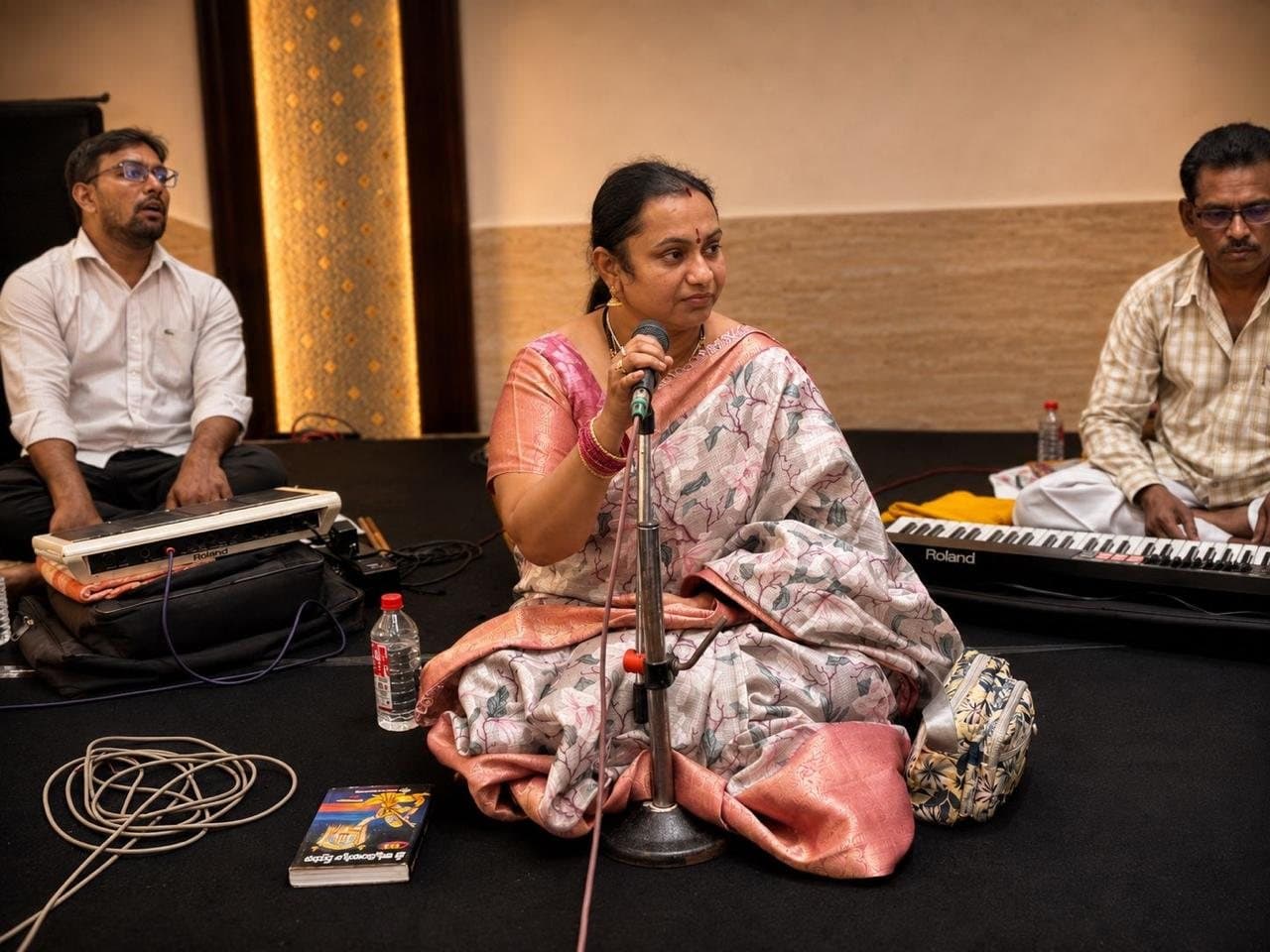
The guru teaching students at the harmonium

Part 9

A Message to Parents

Give Your Child the Gift of Musical Learning

Dear Parents,

Every child has a unique learning journey.

Some children find joy in mathematics, some in sports, some in art, and others in music. Each of these experiences can contribute to learning and personal development.

Carnatic Sangeetam offers children a structured opportunity to explore melody, rhythm, memory, language, and artistic expression.

At Amrutha Raagalaya, we encourage parents to support their children’s learning with patience, encouragement, and realistic expectations.

Let us help children:

  • Enjoy the process of learning music.
  • Develop musical knowledge through practice.
  • Understand the words and meanings of compositions.
  • Express themselves creatively.
  • Appreciate progress without unhealthy comparisons.
  • Discover the richness of Indian classical musical traditions.

The greatest gift we can offer a child is not the pressure to become perfect, but the opportunity to learn, explore, and grow with joy.

Part 10

The Amrutha Raagalaya Approach

Nurturing Musical Learning With Knowledge, Tradition & Care

At Amrutha Raagalaya, we aspire to create a learning environment where children can explore Carnatic music with guidance and encouragement.

Our educational approach can bring together the following areas:

Musical Foundations

Developing familiarity with Shruti, Swara, Tala, and musical structure.

Language & Meaning

Encouraging learners to understand the lyrics and explore the linguistic and literary aspects of compositions.

Cultural Appreciation

Introducing children to composers, repertoire, and the heritage of Indian classical music.

Creative Expression

Supporting musical exploration as children progress in their learning.

Individual Growth

Respecting the child’s age, interests, learning pace, and musical development.

Supportive Education

Encouraging effort, curiosity, and enjoyment of the learning process.

Our purpose is to nurture musical understanding and appreciation while helping each learner develop a meaningful relationship with music.

Part 11

The Lifelong Value of Carnatic Sangeetam

Music That Grows With the Child

Carnatic music can remain a meaningful part of a person’s life beyond childhood.

As children continue learning, they may develop:

  • Greater musical knowledge.
  • A deeper appreciation of compositions.
  • Opportunities for artistic performance.
  • Continued interest in Indian classical traditions.
  • A foundation for advanced musical study.
  • A lifelong source of enjoyment and creative expression.

Some learners may pursue music professionally, while others may enjoy it as a lifelong artistic and cultural practice.

Every musical journey has value, whether it leads to a profession, a passion, or a treasured personal connection.

Part 12

Music, Sanskrit & Cultural Heritage

Preserving Knowledge Through the Next Generation

Indian classical music carries generations of musical, literary, and cultural knowledge.

Carnatic music provides an opportunity for children to encounter compositions in different languages and explore the traditions in which those compositions developed.

When Sanskrit is included through appropriate language and composition study, children can gain opportunities to explore classical vocabulary, literature, and cultural context.

At Amrutha Raagalaya, we see music education as a way to encourage curiosity about both the artistic form and the knowledge associated with it.

Learning the tradition can be a bridge between generations—connecting children with the past while giving them opportunities to express themselves in the present.

Part 13

Our Vision for Every Child

We believe that a meaningful music education should encourage:

Musical Excellence

Developing skills through structured, progressive learning.

Intellectual Curiosity

Encouraging children to listen, explore, and understand.

Cultural Appreciation

Discovering the beauty of classical musical and literary traditions.

Confidence Through Learning

Supporting children as they develop their skills and express themselves.

Lifelong Growth

Helping learners appreciate that musical development is a continuous journey.

Our vision is to inspire children to learn music not merely for performance, but for the knowledge, beauty, discipline, and joy it can bring to their lives.

🎶 Amrutha Raagalaya

Where Every Note Becomes a Journey of Learning

Carnatic Sangeetam is a beautiful blend of melody, rhythm, language, tradition, and artistic expression.

Through appropriate teaching and regular practice, children can develop musical abilities while gaining meaningful learning experiences.

When music is accompanied by an understanding of its lyrics and cultural context, it can open additional pathways for exploration and appreciation.

At Amrutha Raagalaya, we invite children to discover the beauty of Carnatic music in a supportive environment where every learner is encouraged to listen, learn, practice, understand, and express.

🎵 Learn With Joy. Practice With Purpose. Grow Through Music.

Begin today

Nurturing the Next Generation Through Carnatic Sangeetam

Tell us a little about your child and we will share timings and fees. We reply on WhatsApp, usually the same day.

Enquire About Classes/Programs